The Beginner’s Backyard Chicken Checklist
A printable, beginner-friendly guide to starting a backyard flock
🐓 Beginner’s Backyard Chicken Checklist
Thinking about starting a backyard flock?
This simple checklist covers the basics to help you start confidently and avoid common beginner mistakes.
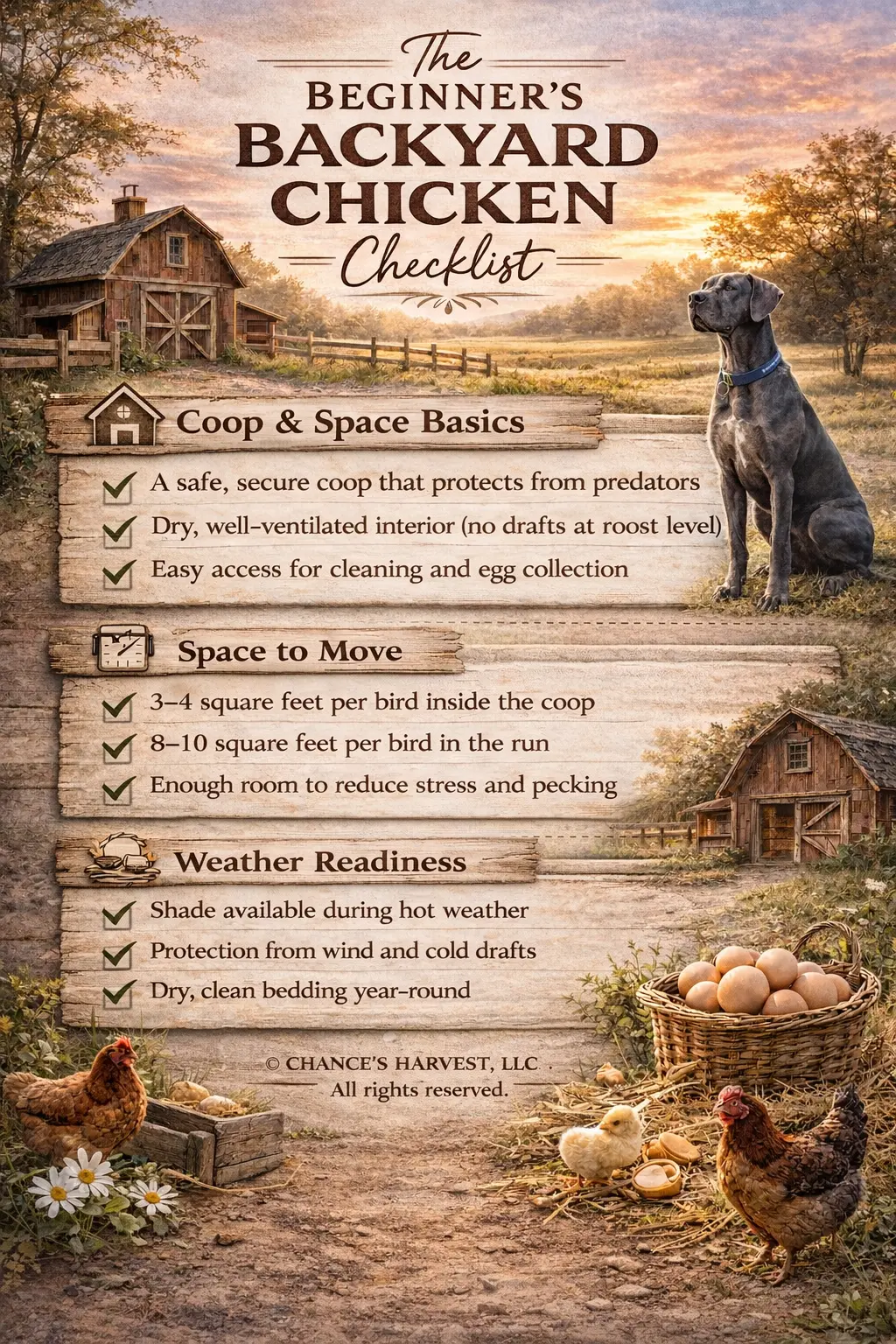
🏡 Coop & Space
☐ Adequate space inside the coop (3–4 sq ft per bird)
☐ Enough outdoor run space (8–10 sq ft per bird)
☐ Dry, ventilated, easy-to-clean coop
☐ Shade in summer and protection from cold drafts
🔒 Safety Basics
☐ Hardware cloth (not chicken wire)
☐ Covered or protected run
☐ Secure, lockable coop doors
☐ Sealed feed storage
🌾 Feed & Water
☐ Chick starter feed
☐ Grower and layer feed plan
☐ Fresh, clean water available daily
☐ Grit once birds are outside
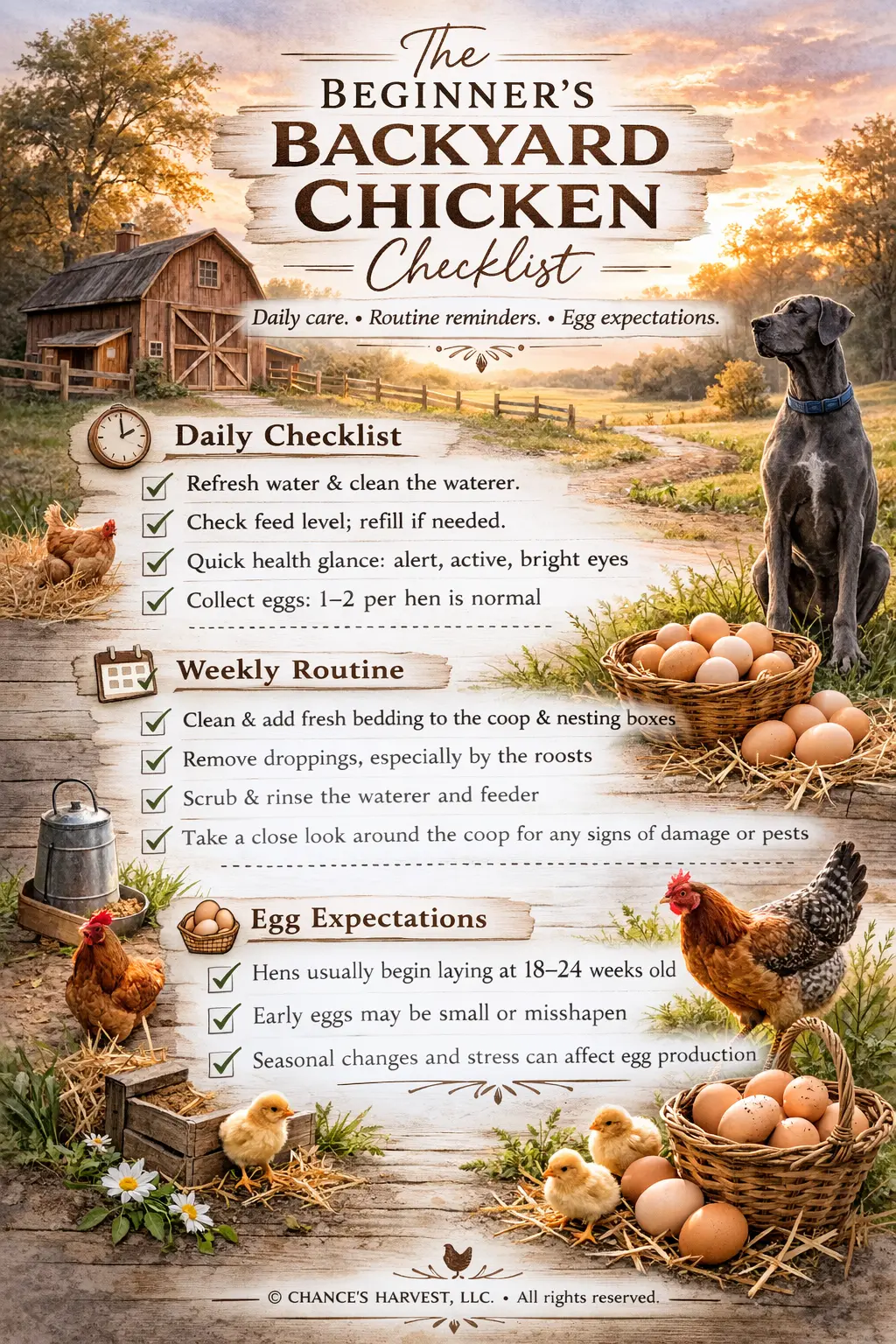
⏰ Daily Care
☐ Refresh water
☐ Check feed
☐ Observe flock health
☐ Secure coop at night
📅 Weekly Care
☐ Spot-clean bedding
☐ Inspect fencing and latches
☐ Observe flock behavior
🥚 Egg Expectations
☐ Most hens lay at 18–24 weeks
☐ Egg production varies by season
☐ Inconsistent laying is normal
📥 Want the printable version?
👉 [Download the Beginner’s Backyard Chicken Checklist (pg. 1]
👉 [Download the Beginner’s Backyard Chicken Checklist (pg. 2]
🐣 7 Tips Before You Buy Chicks
Bringing home baby chicks is exciting — but a little planning upfront makes the experience smoother, healthier, and far more enjoyable. These tips cover the things most beginners don’t realize until after the chicks are home.
1️⃣ Plan for Adult Size — Not Chick Size
Chicks grow quickly. That cute box of fluff becomes a full-grown bird in just a few months.
Before buying chicks, make sure you already have:
- Enough coop space for adult birds
- Adequate run space
- A plan for growth, not just the brooder phase
Tip: It’s much easier to build big once than expand later.
2️⃣ Predators Are Already Nearby
Even if you’ve never seen a predator, they exist — and chicks are easy targets.
Think ahead about:
- Hardware cloth instead of chicken wire
- Covered or enclosed runs
- Secure doors and latches
Good protection early prevents heartbreak later.
3️⃣ Temperature Matters More Than Accessories
Chicks don’t need fancy setups — they need warmth, dryness, and consistency.
Focus on:
- A reliable heat source
- Draft-free space
- Dry bedding
Comfort matters more than toys or decorations.
4️⃣ Start With the Right Feed
Baby chicks have specific nutritional needs.
Use:
- Chick starter feed only
- Clean, shallow waterers
- Grit only when appropriate
Skipping or mixing feeds too early can cause health problems.
5️⃣ Start Smaller Than You Think
It’s tempting to buy more chicks than planned.
Consider:
- Your available space
- Your daily routine
- Long-term care
You can always add more later — overcrowding is much harder to fix.
6️⃣ Eggs Take Time
Chicks won’t lay eggs right away — and that’s normal.
Most hens begin laying at:
- 18–24 weeks of age
Weather, stress, and daylight affect production. Patience is part of the process.
7️⃣ Have a Daily Routine in Mind
Chickens don’t require hours of work, but they do need consistency.
Plan for:
- Daily water and feed checks
- Quick health observations
- Securing the coop each evening
A simple routine keeps both you and your flock comfortable.
📥 Want the Printable Version?
For an easy-to-save, print-friendly version of this guide:
